Stress doesn’t only live in the mind. It leaves fingerprints on the body, and one of the first places it appears is the skin.
If you’ve ever noticed a breakout before an important event, sudden sensitivity during a high-pressure month, or dullness after weeks of poor sleep, you’ve already experienced this connection. Skin is not separate from the nervous system; it is deeply responsive to it.
Below are the most common ways stress shows up on your skin and how to respond with calm, intelligent care.
1) Breakouts That Feel “Random”
Stress-related breakouts often appear in patterns: along the jawline, chin, or areas where you tend to touch your face. Under stress, the body can shift hormone signalling and oil production, and inflammation becomes more likely to surface.
What helps: keep routines consistent and avoid over-correcting. A gentle cleanse, barrier-supportive moisturiser, and targeted actives used carefully are usually more effective than harsh stripping.
2) Redness, Reactivity, and “Everything Stings”
When stress is high, the skin barrier can feel less tolerant. Products that normally feel fine suddenly tingle. Skin flushes more easily. Red patches become more obvious.
This isn’t “weak skin”; it’s skin communicating that it’s overwhelmed, just like you are.
What helps: simplify your routine and prioritise soothing. Think hydration, barrier lipids, and fewer actives until the skin settles.
3) Dullness and Loss of Glow
Chronic stress and poor sleep can make skin look flat and tired even if you’re using excellent products. That’s because the body’s repair processes are closely tied to rest. When recovery is interrupted, you may see a slower turnover rhythm and less radiance.
What helps: bring the focus back to fundamentals: sleep consistency, hydration, and a nighttime ritual that actually calms the system (not a 12-step routine).
4) Dryness and Dehydration That Doesn’t Improve
Stress can disrupt how well the skin retains water. That often shows up as tightness, flaking, or makeup that suddenly sits poorly. Many people respond by exfoliating more which can worsen the issue.
What helps: treat dryness as a barrier signal. Use nourishing moisturisers, avoid over-exfoliation, and aim for calm, steady hydration.
5) Slower Healing and Increased Sensitivity
If breakouts linger longer than usual, or small irritations seem to take weeks to settle, stress may be contributing. When the nervous system is in a prolonged alert state, repair can feel less efficient.
What helps: reduce friction (physical and product-related). Choose gentle formulas, avoid picking, and support recovery with consistent, non-aggressive care.
The SAN LUEUR Perspective: Skin Longevity Requires Nervous System Care
The most overlooked part of skincare is it’s the state in which you apply product.
When skincare becomes a ritual, a pause, a downshift, a moment of stillness, it supports something deeper than surface results. This is why non-invasive tools that encourage consistency and calm can be so powerful and they align skincare with recovery.
A simple, skin-calm evening ritual:
- Cleanse gently
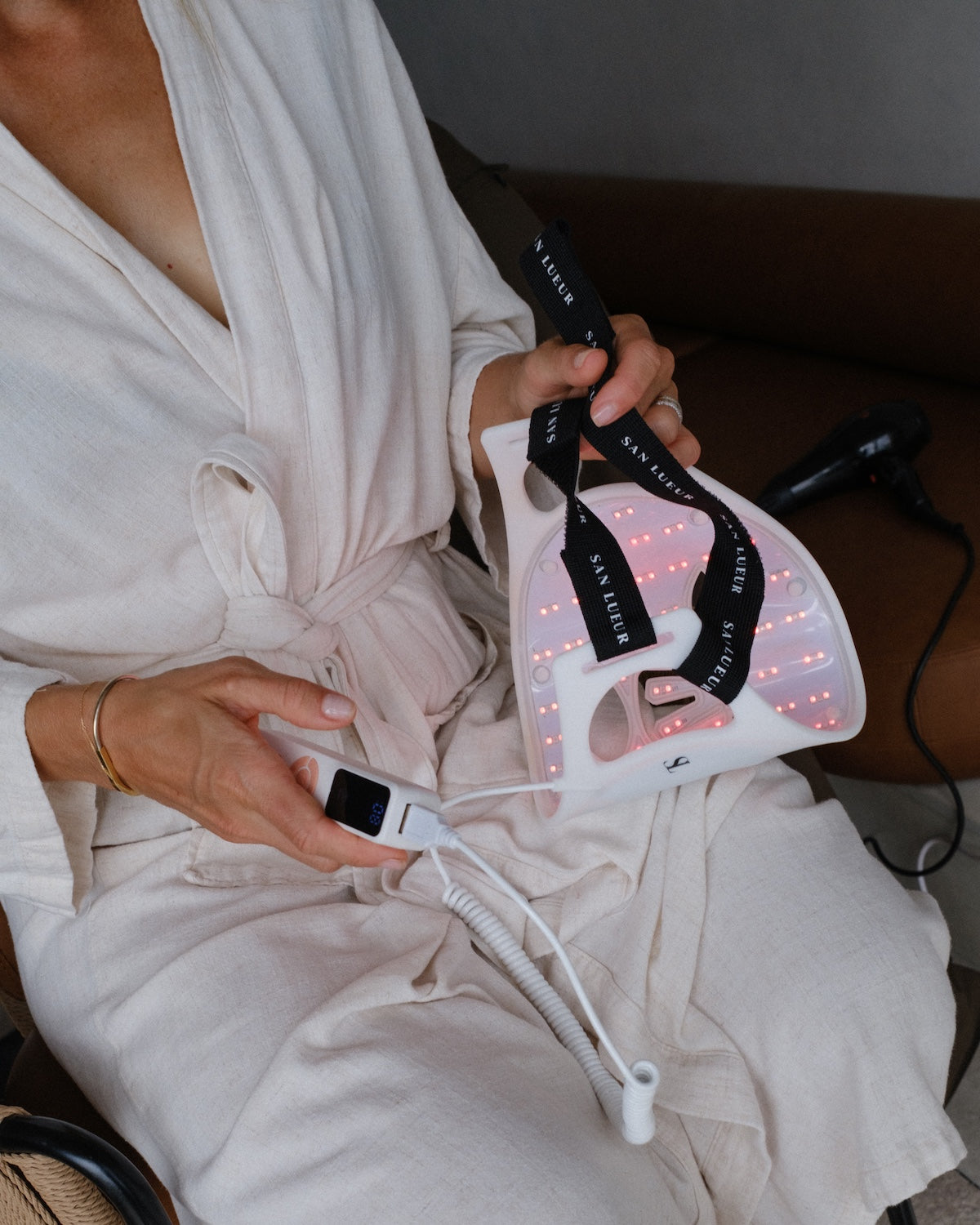
- 10 minutes of stillness (red and near-infrared LED session, breathwork, or both)
- Barrier-supporting serum
- Moisturiser
Not more steps, just better signals to your skin and to your system.
If stress is persistent and affecting sleep, mood, or overall health, consider professional support. Longevity isn’t about pushing through but rather about learning how to recover well.