Longevity is no longer defined by how long we live, but by how well we live and how resilient our bodies remain over time.
As science continues to uncover the mechanisms behind ageing, one truth is becoming increasingly clear: chronic stress is one of the most powerful accelerants of biological ageing. Not only does it affect mental health and energy levels, but it also influences inflammation, cellular repair, hormonal balance, and even how our skin ages.
At SAN LUEUR, we view longevity as a holistic equation. One that recognises skincare, technology, and lifestyle as interconnected systems. Understanding and managing stress is not an optional add‑on to wellbeing; it is foundational to long‑term vitality.
The Biology of Stress: What Happens Beneath the Surface
Stress is not inherently harmful. Acute stress is part of human survival and can enhance performance and focus in short bursts. The issue arises when stress becomes chronic, activating the body’s fight‑or‑flight response for extended periods.
When this happens, the nervous system remains in a heightened alert state, leading to:
- Elevated cortisol levels
- Increased systemic inflammation
- Suppressed immune function
- Impaired cellular repair and regeneration
Over time, these physiological shifts contribute to accelerated ageing at the cellular level, including shorter telomeres and mitochondrial dysfunction; biological markers strongly associated with reduced lifespan and healthspan.
In other words, unmanaged stress feels exhausting and it leaves a measurable imprint on the body.
Stress and Longevity: The Inflammation Connection
One of the most critical links between stress and ageing is chronic inflammation, often referred to as “inflammaging.”
Persistent psychological stress signals the body to release inflammatory mediators. While useful in acute injury or infection, long‑term inflammation contributes to many age‑related conditions, including:
- Cardiovascular disease
- Metabolic dysfunction
- Cognitive decline
- Skin ageing and impaired barrier function
Longevity research consistently shows that individuals who manage stress effectively tend to experience lower inflammatory markers, better metabolic health, and improved quality of life as they age.
Skin as a Stress‑Responsive Organ
The skin is both a target and a messenger of stress.
As the body’s largest organ, the skin responds directly to stress hormones. Elevated cortisol can weaken the skin barrier, reduce collagen production, and impair the skin’s ability to retain moisture and repair itself efficiently.
This is why periods of prolonged stress often coincide with:
- Increased sensitivity or redness
- Breakouts or hormonal flare‑ups
- Accelerated fine lines and dullness
- Slower healing and recovery
Skin longevity, therefore, cannot be separated from nervous system regulation. A calm system supports repair both inside and out.
Stress Management as Preventative Longevity Care
In modern longevity science, stress management is considered a preventative intervention, rather than a reactive one.
Practices that regulate the nervous system help shift the body into a parasympathetic (“rest and repair”) state; the environment in which cellular regeneration, hormone balance, and immune resilience thrive.
Examples include:
- Breathwork and slow, nasal breathing
- Mindfulness or meditation practices
- Gentle movement such as walking, stretching, or yoga
- Consistent sleep and circadian rhythm alignment
Even in small daily doses, the compounding effect of these practices can influence how the body ages over decades.
Where Technology Meets Nervous System Regulation
Modern wellness technology is increasingly exploring how non‑invasive tools can support relaxation, recovery, and stress reduction.
Light‑based therapies, particularly red and near‑infrared wavelengths, have been studied for their role in:
- Supporting mitochondrial function
- Enhancing circulation
- Reducing inflammation
- Promoting cellular recovery
Beyond physical benefits, these light-based therapies may also help signal safety to the nervous system, encouraging the body to transition out of chronic stress states.
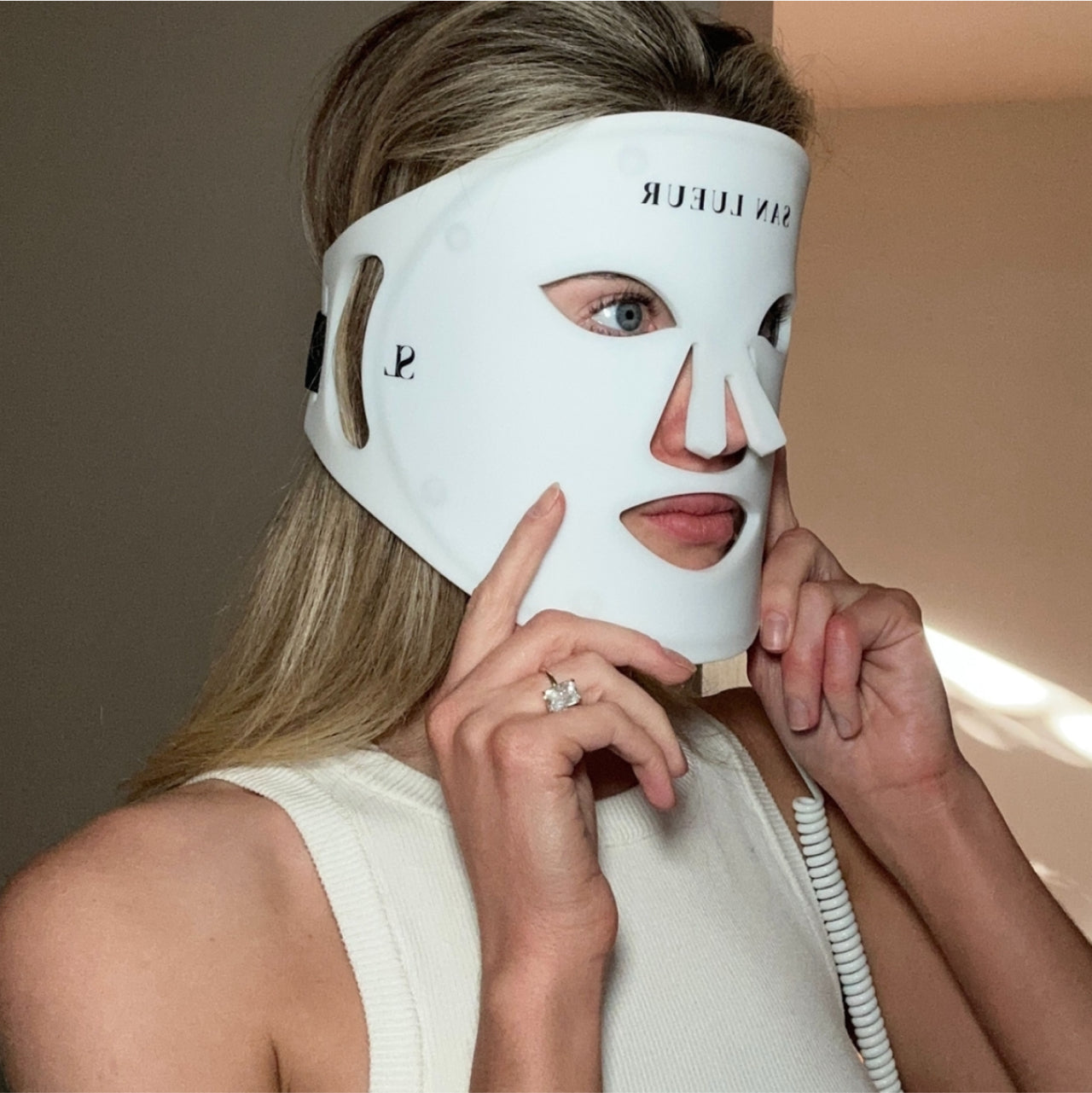
Within the SAN LUEUR ritual, this technology is used to help us pause, instill a boundary, and signal to the body that it is safe to slow down.
The Ritual Effect: Why Consistency Matters More Than Perfection
Longevity is cultivated through repetition of supportive behaviours.
Whether it’s an evening LED session, intentional skincare application, breathwork, or screen‑free wind‑down time, regular stress‑reducing rituals help retrain the nervous system to expect moments of calm.
Over time, these rituals can:
- Lower baseline cortisol levels
- Improve sleep quality
- Enhance emotional resilience
- Support healthier ageing processes
The key is consistency, not intensity.
Psychological Stress and Epigenetics
One of the most fascinating areas of longevity research lies in epigenetics: the study of how environmental and lifestyle factors influence gene expression.
Chronic stress has been shown to influence which genes are activated or suppressed, including those related to inflammation, immunity, and cellular repair. Conversely, stress‑reducing interventions may positively influence gene expression associated with resilience and longevity.
This means stress management does more than affect how you feel, it also influences how your biology behaves.
Reframing Stress Management as Longevity Investment
In a culture that often glorifies productivity and endurance, rest can feel counterintuitive. Yet from a longevity perspective, recovery is active biological optimisation.
Managing stress effectively:
- Preserves metabolic health
- Supports brain and cognitive longevity
- Protects skin structure and integrity
- Enhances emotional regulation and wellbeing
It is one of the few longevity strategies that benefits every system of the body simultaneously.
A SAN LUEUR Perspective on Longevity
At SAN LUEUR, longevity is not about reversing time but supporting the body’s innate intelligence to age well.
By integrating advanced skincare technology with intentional daily rituals, we create space for both visible skin benefits and deeper physiological restoration.
Stress management is not separate from skincare. It is woven into it because the skin reflects the state of the system beneath it.
FAQ: Stress, Longevity & Nervous System Health
How does chronic stress affect longevity?
Chronic stress can accelerate biological ageing by increasing cortisol and inflammation over time. This may affect sleep quality, immune function, metabolism, and cellular repair, all of which are closely linked to healthspan (how well you live) and longevity (how long you live). Managing stress supports resilience and long-term wellbeing.
Can stress make you look older?
Yes. Prolonged stress can contribute to dullness, dehydration, increased sensitivity, and the appearance of fine lines. Stress hormones may weaken the skin barrier and interfere with repair processes, which can make skin look less even, less luminous, and more reactive over time.
What is “inflammaging”?
Inflammaging refers to low-grade, chronic inflammation that increases with age. Ongoing stress can contribute to this process by keeping the body in a heightened state of alert, which may increase inflammatory signalling and reduce the body’s ability to recover and regenerate efficiently.
What are the best daily stress management habits for longevity?
The most effective daily habits are simple and consistent: prioritising sleep, getting morning light exposure, walking regularly, practising slow breathing, and creating a reliable wind-down routine. Longevity benefits come from repetition, not intensity, because the nervous system responds to safety cues over time.
How does sleep influence stress and ageing?
Sleep is when the body does much of its repair and recovery. Poor sleep can elevate cortisol, disrupt appetite hormones, increase inflammation, and reduce skin regeneration. Improving sleep quality is one of the most direct ways to support stress regulation and long-term vitality.
Can skincare really help with stress?
Skincare can support stress indirectly through ritual and nervous system regulation. A consistent routine can signal safety, reduce overstimulation, and build an evening “downshift” pattern. While skincare doesn’t replace stress treatment, it can become a grounding daily practice that supports resilience.
How does stress show up on the skin?
Stress can appear as breakouts, redness, dryness, sensitivity, dullness, and slower healing. Many people also notice flare-ups of eczema, dermatitis, or rosacea during high-stress periods. Supporting the skin barrier and reducing inflammation are key.
Is LED light therapy good for stressed skin?
LED light therapy is commonly used to support skin calmness and visible recovery. Certain wavelengths are associated with improved appearance of redness, texture, and overall radiance. As part of a consistent ritual, LED sessions can also encourage stillness which is an often overlooked element of stress regulation.
What is the fastest way to lower stress in the moment?
A practical, fast method is slow breathing: inhale gently through the nose and extend the exhale. Longer exhales help shift the body toward a calmer state. Pairing this with a brief walk, hydration, or a screen break can reinforce the signal to the nervous system that it’s safe to downshift.
What’s the difference between stress management and relaxation?
Relaxation is a short-term state; stress management is a long-term system. Stress management includes sleep consistency, movement, boundaries, nutrition, and emotional regulation habits that reduce your baseline stress load. Relaxation can be part of it, but lasting results come from repeatable structure.
How long does it take for stress reduction to improve skin?
Some people notice changes quickly, such as reduced redness or improved glow within days to weeks of improved sleep and routine consistency. Deeper improvements (texture, barrier strength, fewer flare-ups) typically build over several weeks to months, especially when stress triggers are chronic.
What’s a realistic longevity routine for busy people?
A realistic routine includes three anchors: a consistent bedtime window, daily walking, and a 10-minute evening wind-down ritual. The goal is to reduce baseline overload and improve recovery. Even small, repeatable habits compound significantly over time.
Final Thoughts
Longevity isn’t achieved through a single intervention or breakthrough product. It’s built slowly, thoughtfully, and intentionally.
By prioritising stress management, through routine, technology, and mindful living we give our bodies the conditions they need to repair, regenerate, and thrive over time.
Calm is not indulgent, it is biological intelligence. And in the pursuit of longevity, it may be one of the most powerful tools we have.